
Understanding Non-Destructive Testing (NDT) and Its Importance in Modern Industry
Oct 02, 2026
Working: 8.00am - 5.00pm



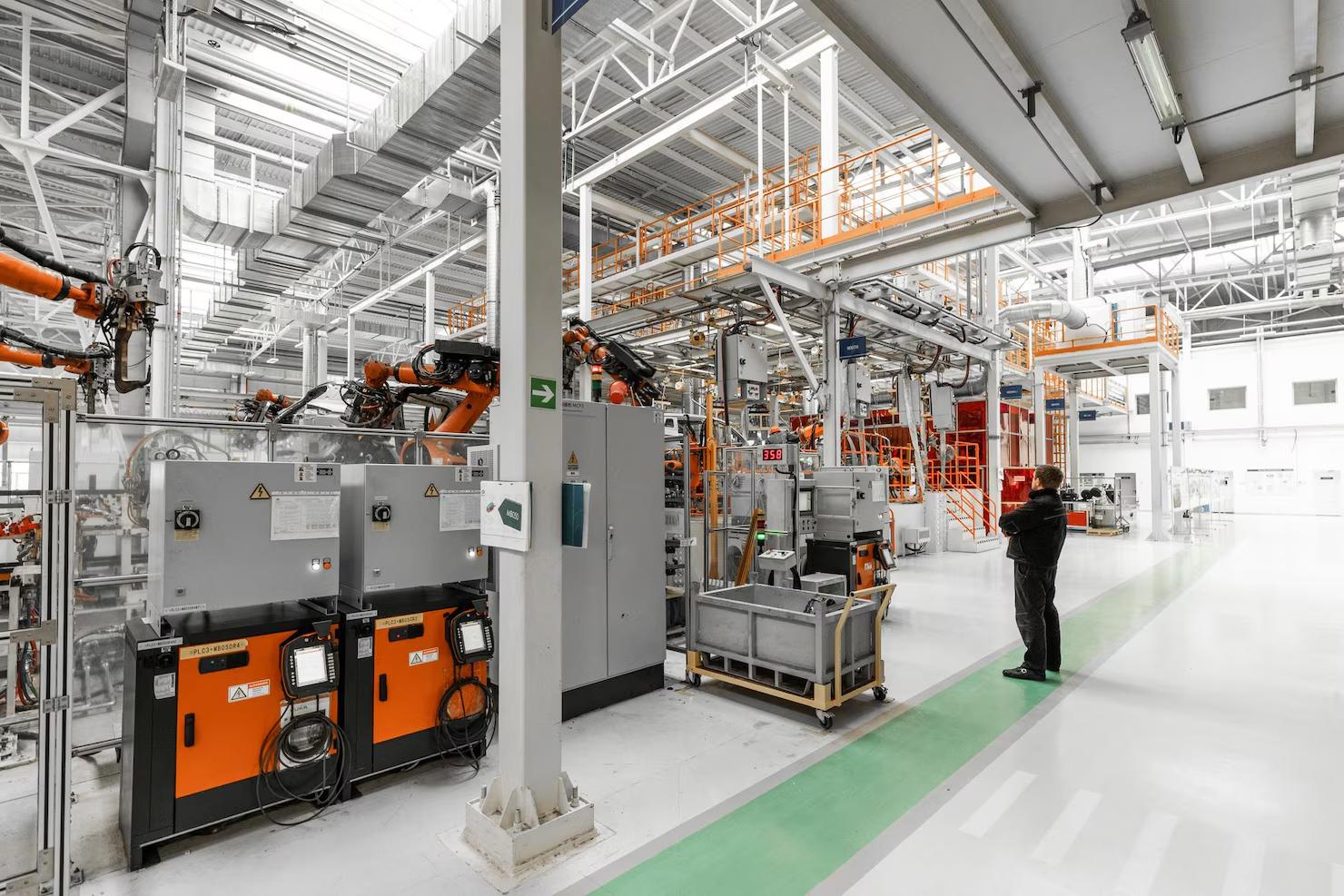
Non-Destructive Testing (NDT) plays a critical role in maintaining the safety, quality, and reliability of industrial equipment, structures, pipelines, welds, and components. Unlike destructive testing methods, NDT allows professionals to examine materials and identify defects without damaging or affecting their future usability.
With industries becoming increasingly focused on safety, quality control, and preventive maintenance, the demand for qualified NDT professionals continues to grow across sectors such as Oil & Gas, Petrochemical, Refineries, Power, Nuclear, Aerospace, Marine, Defence, Pipelines, and Heavy Engineering.
Non-Destructive Testing is a group of inspection techniques used to evaluate the condition, quality, and integrity of a material or component without causing permanent damage.
NDT professionals use specialized equipment and procedures to detect surface and internal defects such as cracks, corrosion, weld discontinuities, voids, inclusions, and other imperfections.
The information obtained through NDT helps engineers and quality professionals make informed decisions about the safety, performance, maintenance, and serviceability of industrial assets.
Industrial equipment and structures operate under demanding conditions involving pressure, temperature, vibration, corrosion, and mechanical stress. Even a small undetected defect can potentially lead to equipment failure, production downtime, safety risks, or significant financial losses.
NDT helps organizations:
Different inspection methods are selected depending on the material, component, defect type, and inspection requirements.
Ultrasonic Testing uses high-frequency sound waves to identify internal discontinuities in materials. It is widely used for weld inspection, thickness measurement, corrosion monitoring, and detecting internal defects.
Radiographic Testing uses X-rays or gamma rays to examine the internal structure of components and welds. It is commonly used to identify internal weld defects and discontinuities.
Magnetic Particle Testing is primarily used for detecting surface and near-surface discontinuities in ferromagnetic materials. It is commonly applied to welds, castings, forgings, and fabricated components.
Liquid Penetrant Testing helps identify surface-breaking defects such as cracks and porosity. It can be used on a wide range of non-porous materials.
Visual Inspection is one of the most fundamental inspection techniques. Trained inspectors examine surfaces, welds, components, and structures for visible defects or irregularities.
Eddy Current Testing uses electromagnetic induction to identify surface and near-surface defects and can also be used for material characterization and inspection of conductive materials.
Phased Array Ultrasonic Testing (PAUT) and Time of Flight Diffraction (TOFD) are advanced ultrasonic techniques used for detailed weld inspection and defect evaluation.
NDT is an essential part of quality assurance and inspection programs across numerous industries, including:
These industries require skilled professionals who understand inspection procedures, equipment, standards, reporting, and safety requirements.
NDT offers a wide range of career opportunities for engineering graduates, diploma holders, technicians, and experienced inspection professionals.
Depending on their qualifications and experience, professionals can pursue roles such as:
Professionals with recognized certifications and practical experience can explore opportunities in both domestic and international industrial projects.
Understanding NDT concepts is important, but practical exposure is equally valuable. Professionals need to understand how inspection equipment is operated, how procedures are followed, how indications are evaluated, and how inspection results are documented.
A quality-focused NDT training program should combine:
Hands-on learning helps candidates develop confidence and prepares them for real-world inspection environments.
As industries continue to adopt advanced technologies and place greater emphasis on asset integrity, safety, and predictive maintenance, NDT is becoming increasingly important.
Advanced inspection technologies such as PAUT, TOFD, Eddy Current Testing, and digital inspection systems are creating new opportunities for professionals who continuously upgrade their skills.
For aspiring professionals, investing in the right training and recognized certification can be an important step toward building a long-term career in inspection and quality control.
Non-Destructive Testing is much more than a quality-control procedure. It is an essential part of industrial safety, asset integrity, reliability, and maintenance.
For organizations, effective NDT helps identify potential problems before they become major failures. For professionals, NDT offers opportunities to build specialized technical skills and pursue careers across a wide range of industries and international markets.
Start building your expertise today with industry-focused NDT training and professional certification.
If you are going to use of Lorem Ipsum need to be sure there isn't hidden of text

Right Ndt- Copyright 2026. All rights reserved.
We must explain to you how all seds this mistakens idea denouncing pleasures and praising account. All seds this mistakens idea denouncing pleasures.